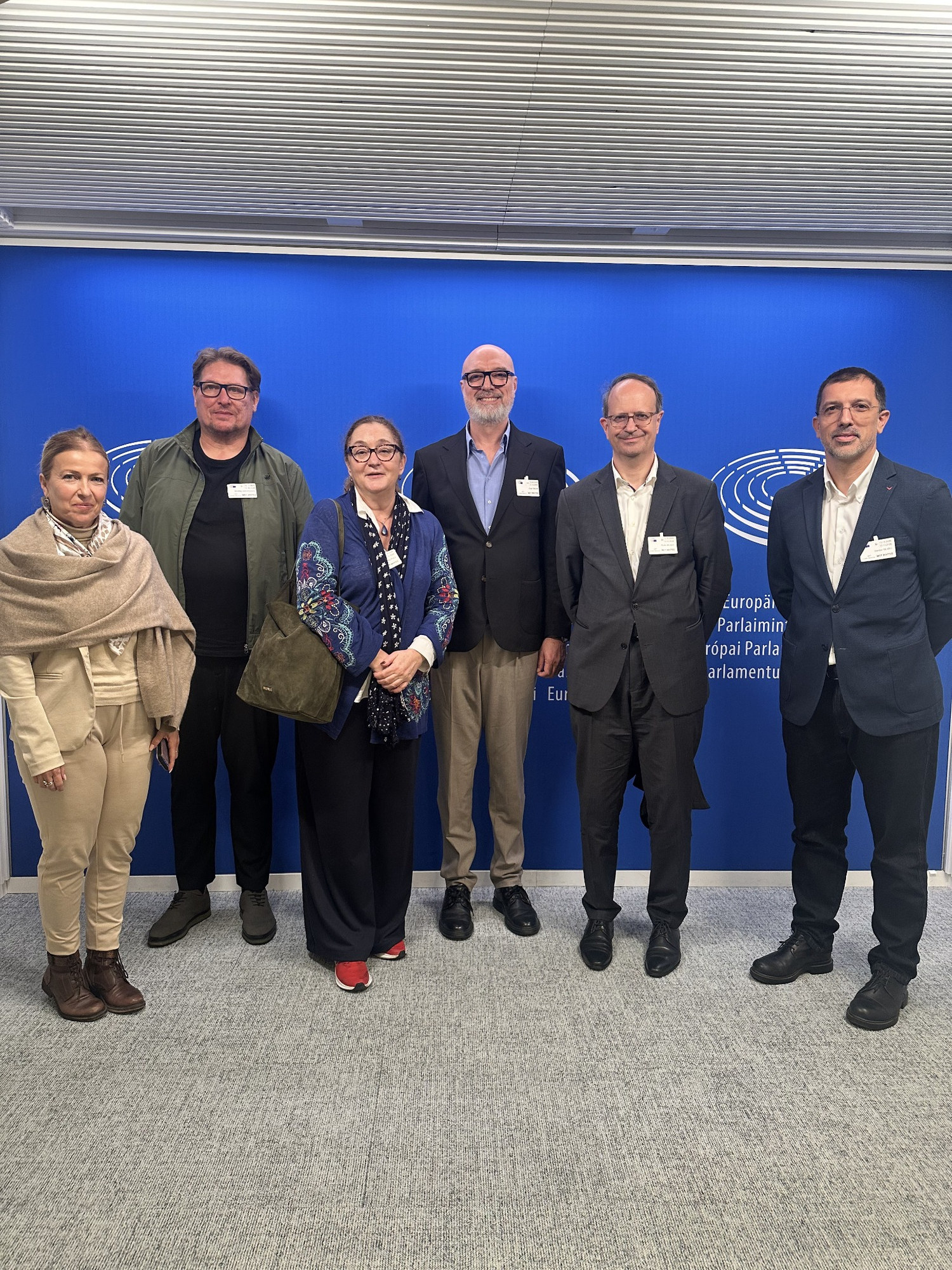
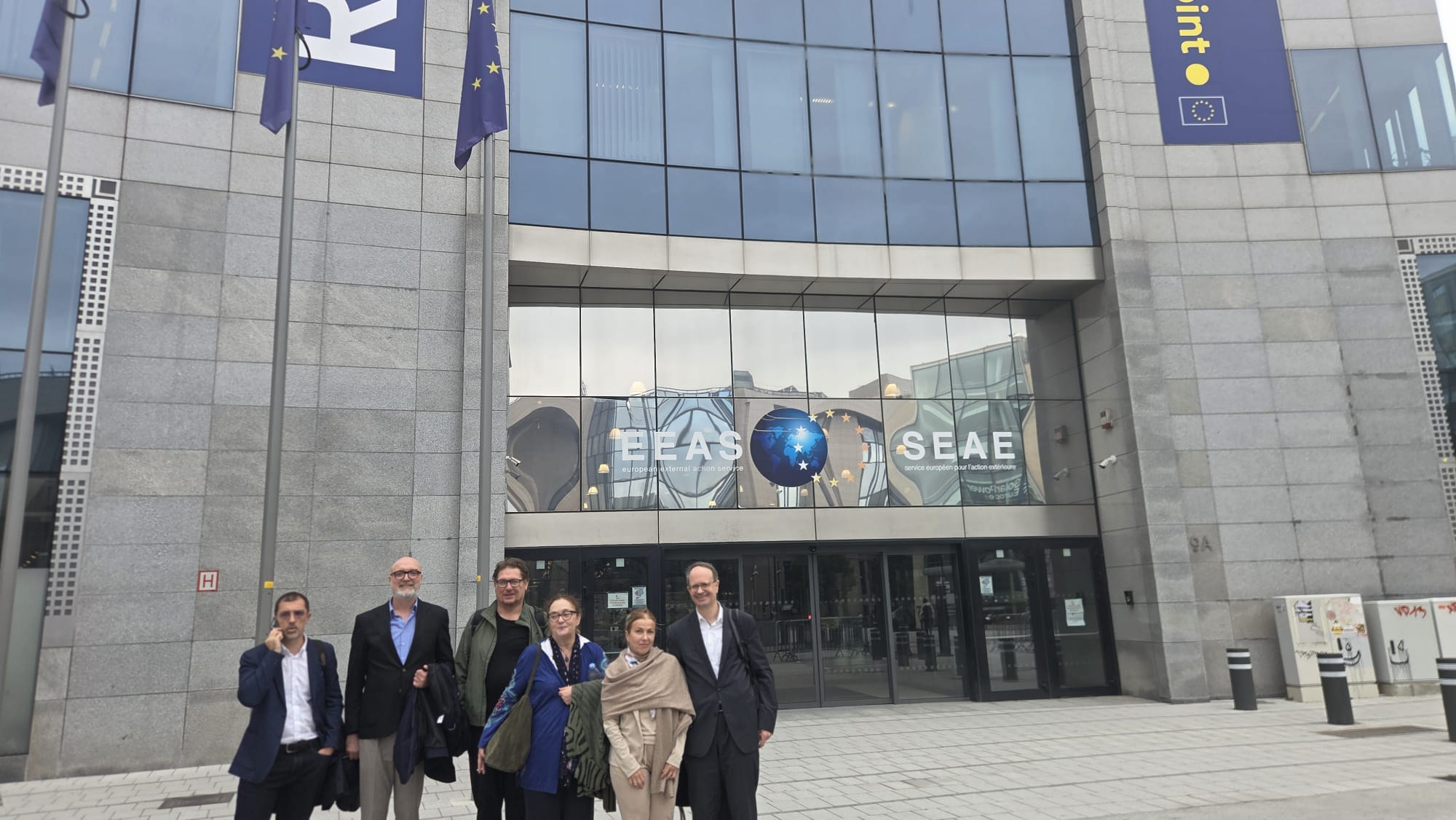
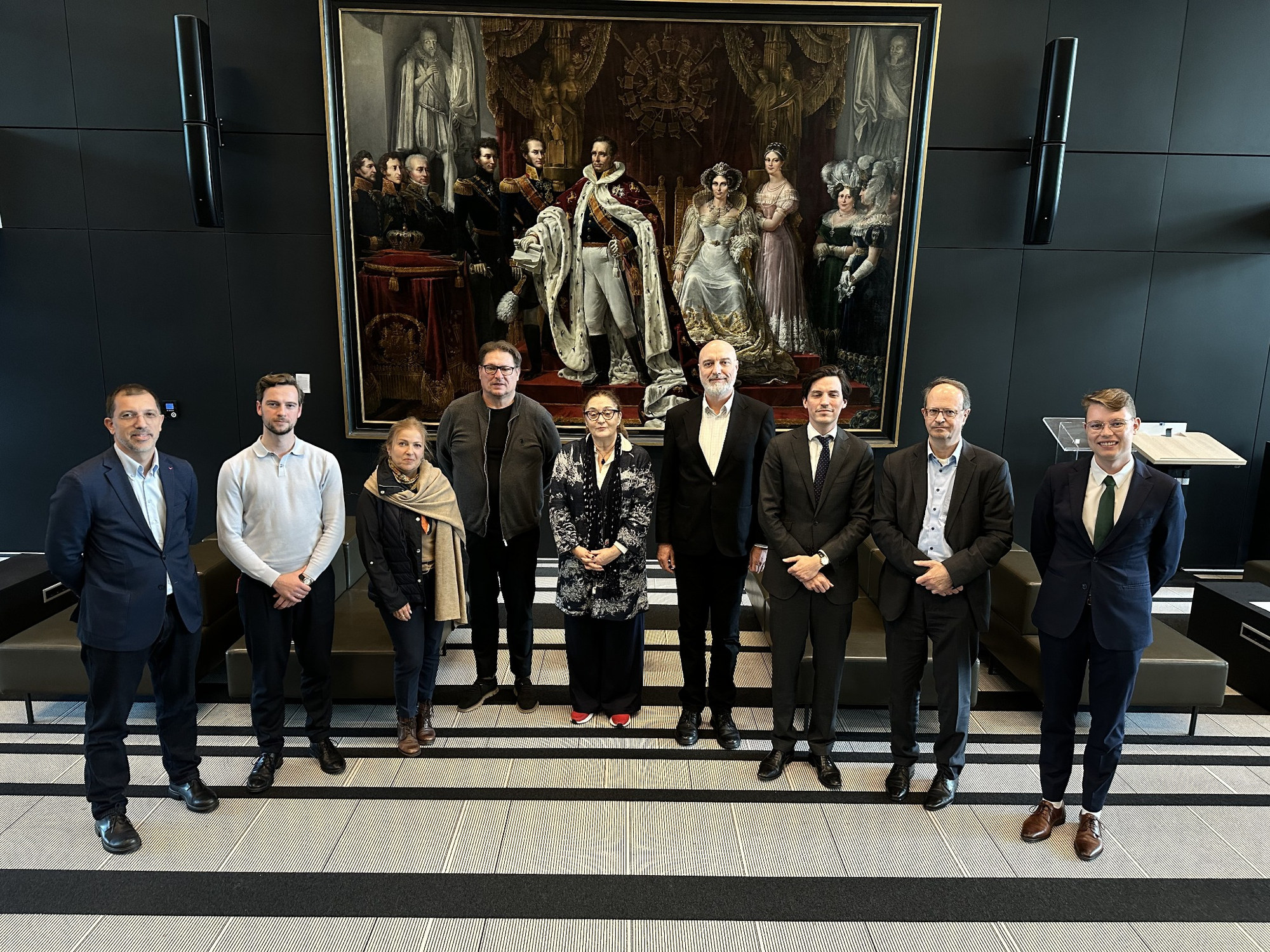
From 12 to 15 October 2026, a joint Kosovo Serb–Albanian delegation visited Brussels and The Hague as part of the initiative “Moving from ‘Kosovo Serb Integration’ to(wards) a New Social Contract for a Truly Multiethnic Kosovo”, jointly implemented by Space/s for Societal Change and the Center for Affirmative Social Action (CASA), with the support of the Embassy of the Kingdom of the Netherlands in Kosovo.
The delegation brought together representatives of the implementing organizations, the Kosovo Serb Civil Society Platform and Kosovo Albanian civil society actors involved in the initiative. The visit aimed to promote the New Social Contract approach, strengthen international advocacy and explore opportunities for continued support to the initiative.
In Brussels, the delegation met with Marko Makovec, Principal Adviser for Reconciliation and Normalization in the Western Balkans at the European Commission’s DG ENEST; members of the European Parliament and their staff, in a meeting hosted by MEP Gordan Bosanac; and advisers to the EU Special Representative for the Belgrade–Pristina Dialogue at the European External Action Service (EEAS).
The discussions focused on the potential contribution of the New Social Contract initiative to reconciliation and to the EU-facilitated dialogue between Kosovo and Serbia. The delegation shared perspectives on the situation and concerns of Kosovo’s communities, emphasizing the need to give greater attention to local self-governance within the political dialogue. The importance of minority and collective rights, alongside meaningful Kosovo Serb–Albanian dialogue, was also highlighted.
In The Hague, the delegation met with representatives of the office of the OSCE High Commissioner on National Minorities and the Western Balkans team of the Dutch Ministry of Foreign Affairs. The Dutch Ministry was informed about the initiative’s activities and achievements to date, while the delegation also received information on future plans concerning the MATRA program.
The visit also provided an opportunity to discuss prospects for continued international engagement and potential future financial support for the initiative.
Building on the experience of an earlier advocacy visit to Berlin, the Brussels and The Hague meetings formed part of ongoing efforts to bring civil society perspectives into international discussions on Kosovo’s future and to promote a broader societal approach to reconciliation and political dialogue.